More Than a Memory: The Importance of Holocaust Remembrance Day
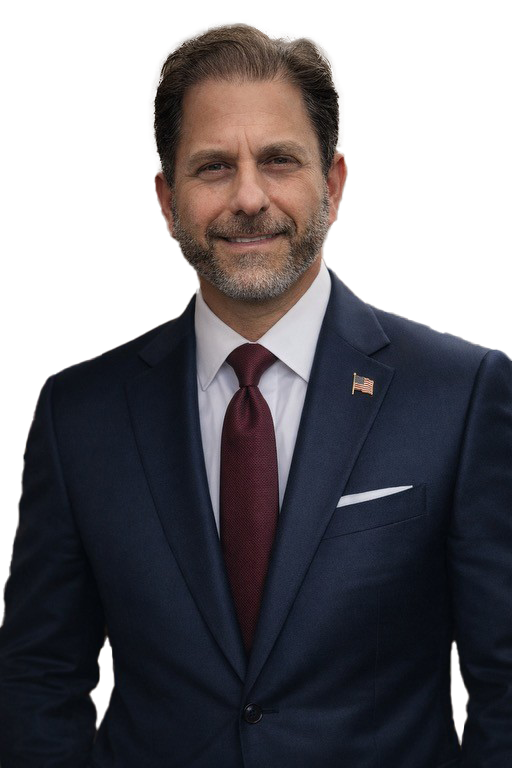
A column from Assemblyman Ari Brown (R-Cedarhurst)
Today, April 14, Yom HaShoah, Holocaust Remembrance Day, is never simply a date on the calendar for me. It is not only about six million murdered Jews, nor only about memorial candles and ceremonies. It is deeply personal because my own family lived through one of the least-known chapters of that history.
My mother was born in Milano, Italy. My grandmother carried memories that no person should ever have to carry. Their lives became part of the remarkable story later told by Ruth Gruber in Haven, the account of one thousand refugees brought from Italy to the United States in 1944.
Most people know the broad story of the Holocaust, but very few know that while Europe was still burning, and while millions were already being murdered, one thousand refugees were permitted to enter America outside normal immigration quotas.
One thousand, no more.
At a time when ships carrying desperate refugees were often turned away, when nations debated while innocent people were being slaughtered, one thousand human beings were suddenly given a chance to live.
President Franklin Roosevelt approved that rescue, though history also reminds us that America at the time was deeply reluctant to accept Jewish refugees. Antisemitism existed openly in American public life. Henry Ford had circulated poisonous antisemitic ideas across the country. Charles Lindbergh, admired by millions, publicly warned against foreign influence and helped fuel suspicion toward Jews. Even within government, there were officials who wanted America’s doors closed.
Roosevelt himself did not act quickly enough while millions remained trapped in Europe. That remains one of history’s painful truths. Yet in 1944, under military realities created by Allied advances through Italy and pressure from people inside his own administration who understood the horror unfolding, one thousand refugees were finally allowed entry.
Those refugees were sent to Fort Ontario in Oswego, New York, but even there, freedom was incomplete.
They arrived in America, but behind fences.
Fort Ontario was a former military base surrounded by barbed wire. Guards stood watch. Families were counted, supervised, and restricted. They had escaped Europe, but they still did not yet know if America would truly become home.
In many ways, it resembled internment.
Not a death camp, not a prison in the way Europe knew prisons, but still a place where refugees who had escaped persecution once again lived behind barriers. The comparison was often made to the Japanese internment camps operating in America during that same war. The circumstances were different, but the emotional truth was similar: even rescue came with caution, hesitation, and uncertainty.
My mother and grandmother lived inside that uncertainty for eighteen months.
For eighteen months, they did not know whether they would remain in America or be forced back to Europe once the war ended. That uncertainty lasted until President Truman finally allowed the refugees to leave Fort Ontario and remain legally in the United States.
Think about what that meant. They had survived war, persecution, and exile, yet still did not know whether they had a permanent future.
Ruth Gruber became central to this story. She was not simply the author years later. Sent by Secretary Harold Ickes, she traveled to Italy, boarded the ship, spoke German and Yiddish, comforted frightened mothers and children, and escorted these refugees across the ocean.
I had the privilege of meeting Ruth Gruber in 1984 during the fortieth reunion connected to that rescue. Meeting her meant meeting someone who had physically carried part of my family’s history in her own hands.
What is often forgotten is what happened next.
Those one thousand refugees did not remain strangers.
They became Americans.
They worked, built families, opened businesses, served communities, raised children, and became part of the fabric of this country.
And I can assure you, every one of them wanted exactly that.
They did not come here to protest America. They did not come here to reject America. They came here grateful for life itself and determined to belong.
That may be the strongest answer to hatred.
From one thousand frightened refugees came generations of Americans. My mother’s life became children, grandchildren, and a living answer to those who believed Jews would disappear.
History always asks difficult questions. Why only one thousand when millions were dying? Why so late? Why did it take so much pressure to do what should have been morally obvious?
Those are fair questions, and history should never avoid them.
But one thousand lives saved still meant one thousand futures created.
For my family, that number meant everything.
That is why Yom HaShoah matters. Memory is not only mourning. It is proof, proof that survival became contribution, proof that people nearly erased became citizens, neighbors, parents, grandparents, and part of the American story.
The lesson is not only what evil destroyed.
It is also what courage, survival, and opportunity allowed to live again.